

Is ERPNext free? Yes, ERPNext is free and open-source software released under the GPLv3 license, and at Data Value we help businesses in the region deploy it without hidden licensing fees.
Real costs still exist elsewhere, in hosting, customization, and support, and this guide breaks each one down clearly for decision-makers evaluating open source ERP for the first time.
Table of Contents
Is ERPNext Really Free and Open Source?
The short answer to whether ERPNext is free is yes, at the source-code level. ERPNext is released under the GPLv3 license, one of the most widely used free and open source software (FOSS) licenses in the world.
This means anyone can download the code, install it, modify it, and even redistribute it, as long as they keep the same license terms.
There are no licensing fees, no per-seat charges, and no expiry date built into the software itself. This is fundamentally different from proprietary ERP vendors, who charge annual license fees per user and often lock core features behind premium tiers.
With ERPNext, the entire codebase accounting, inventory, manufacturing, CRM, HR, and project modules is open for anyone to inspect on ERPNext’s GitHub repository.
For CFOs and procurement managers comparing ERPNext vs paid ERP platforms, this distinction matters.
A GPLv3 license means the community edition of ERPNext is not a stripped-down demo; it is the full, production-grade system that companies of every size already run in live environments.
No licensing fees also mean budget owners can redirect what they would have spent on software licenses toward implementation, training, and support instead.
That said,free here refers to the license, not to every cost of running a business system. Businesses still need infrastructure, technical skill, and ongoing maintenance, which we cover in the sections below.
How to Download ERPNext for Free and Self-Host It
Because ERPNext is an open-source ERP, you can download ERPNext for free directly from the ERPNext GitHub at any time, without registration or payment.
The source code, installation scripts, and documentation are all publicly available, which is one of the clearest proofs that ERPNext free access is real and not a limited-time offer.
To self-host ERPNext, a business typically needs a Linux server, a database (MariaDB), Redis for caching and background jobs, and Node.js to build the front end. Many teams simplify this with the official Docker images, which package these dependencies together and shorten setup time considerably.
This is what people mean by self-hosted ERP: you own the server, you control the data, and you are responsible for keeping everything patched and running.
Self-hosting is genuinely free in terms of software licensing, but it is not free in terms of effort.
Someone on the team, or a hired partner, needs to handle server setup, backups, security updates, and performance tuning.
For a small internal system with a handful of users, this might take a few hours a month. For a growing company running finance, inventory, and HR on the same instance, it becomes a real operational responsibility that should be planned for from day one.
Does ERPNext Have a Free Trial, and What Does the Free Version Include?
Many buyers researching an ERPNext free trial or ERPNext free download actually want to test the software before committing to infrastructure decisions. The good news is that ERPNext free version functionality is not limited: whether you self-host or use a hosted trial, you are running the same community edition, with the same modules and the same code.
For a faster start, Frappe Cloud, the official managed hosting platform from the team behind ERPNext, offers a free trial period so businesses can explore the system without provisioning their own server first. This is useful for evaluation, proof-of-concept projects, and training new team members before a full rollout.
Once the trial period ends, Frappe Cloud hosting is priced on a usage basis rather than per user, which is worth noting for any team comparing ERPNext free hosting claims against what a hosted plan actually costs long term. There is no obligation to move to paid hosting after the trial; a business can just as easily export its data and continue on self-hosted infrastructure instead, keeping the free and open source software (FOSS) model intact.
ERPNext Free for Small Business: What’s Included, Including Frappe HR
For a growing company, ERPNext free for small business is often the most attractive angle, because a lean team can get accounting, sales, purchasing, and inventory running on one platform without a large upfront software budget. The community edition includes everything needed to run daily operations: sales orders, invoicing, stock tracking, basic manufacturing, and reporting.
Human resources is part of this picture too. Frappe HR, also known as HRMS, is a separate but fully free and open-source application built by the same team, covering attendance, leave management, payroll, and recruitment.
A small business can run ERPNext and Frappe HR together, under the same GPLv3 terms, without paying for a separate HR license. Its source code is maintained publicly on the Frappe HR GitHub repository.
This combination is precisely why so many small and mid-sized businesses treat ERPNext as a serious alternative to paid ERP suites: they get a full operational stack, not a limited starter plan, and they are free to grow into more modules as the business grows.
It is also why ERPNext keeps coming up in searches for a free ERP for small businesses that doesn’t feel limited or half-finished.
Self-Hosted vs Cloud: Where the Real Costs Come In
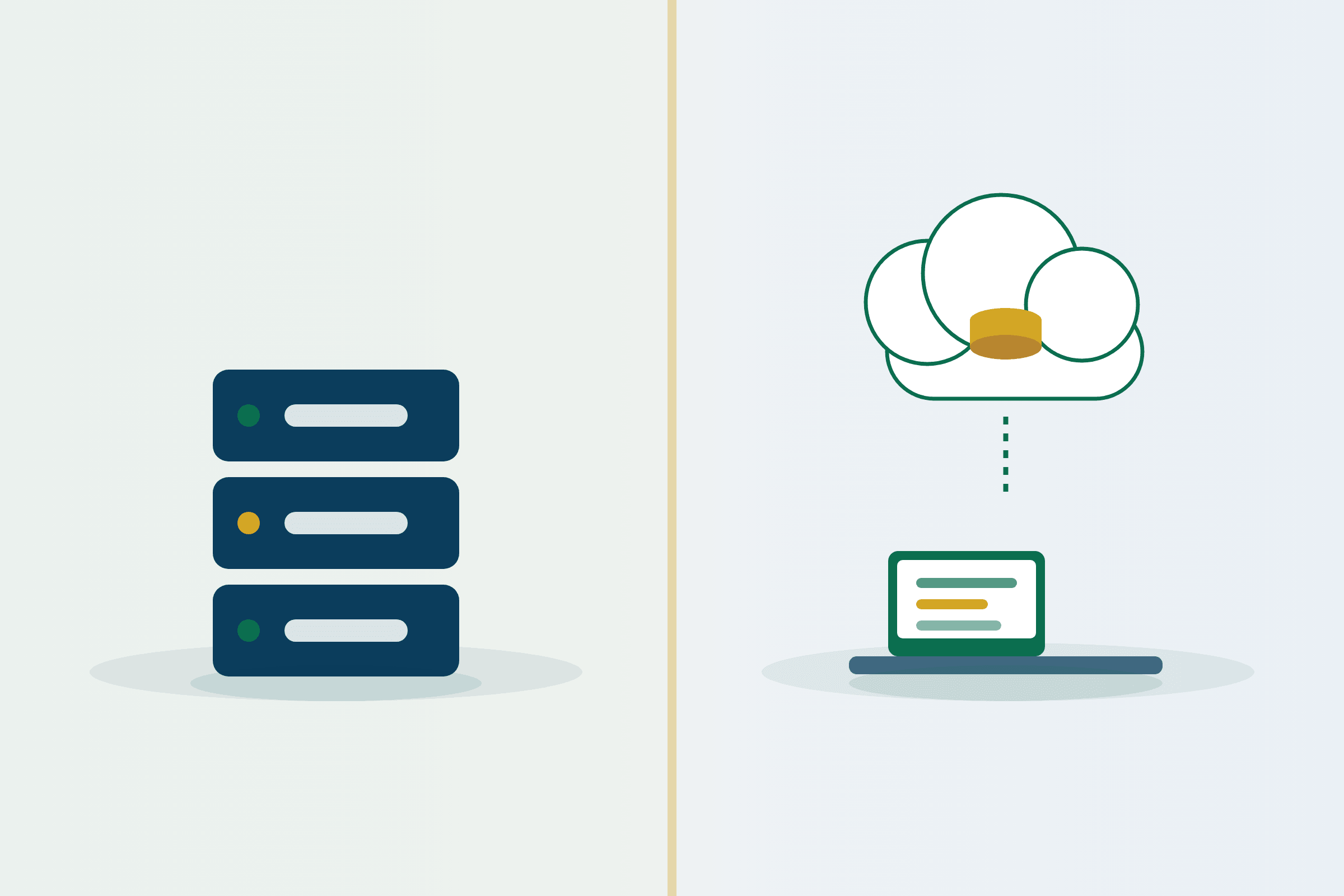
The most practical question is not simply “is ERPNext free,” but where the money actually goes once a business commits to using it. This is best understood through the lens of self-hosted vs. cloud, since each path distributes costs differently.
With self-hosted ERP, the software license costs nothing, but the business pays for server infrastructure, someone’s time to maintain it, backups, security, and eventual scaling as data volume grows. These costs are often lower in absolute terms, but they require in-house technical capacity or a support partner on retainer.
With Frappe Cloud, the trade-off shifts: hosting, upgrades, and infrastructure monitoring are handled by the platform, and the business pays a predictable, usage-based fee instead of building that capability internally. For a lean team without dedicated IT staff, self-hosted vs. cloud often comes down to whether the hours saved are worth more than the hosting fee.
Beyond hosting, a third cost center applies to both paths: implementation and customization. Configuring workflows, migrating historical data, building custom reports, and training staff all take real time from a knowledgeable partner. This is where a structured self-hosted vs cloud comparison should include implementation scope, not just server pricing, because that is typically where the largest share of a project’s real budget goes.
Read Also:
- How to Choose an ERP for a Contracting Company?
- What Is an ERP System for Project Sites, and How Does It Protect Your Project Data?
- The Importance of Mobile Apps for Businesses
- Discover the Best ERP in Saudi Arabia (ZATCA-Compliant)
Conclusion: Making the Right Call on ERPNext’s Real Costs
So, is ERPNext free? At the license level, yes, completely, permanently, and without a catch. ERPNext’s free and open-source access under GPLv3 gives businesses the full community edition, the same code running in production systems worldwide, with no per-seat fees and no expiry date. Frappe HR extends that same model to human resources at no extra licensing cost.
The costs that do exist sit elsewhere: hosting, whether self-hosted or through Frappe Cloud, plus implementation, customization, and ongoing support. None of these are hidden; they are simply separate from the software license, and they are the same categories any serious ERP project has to plan for regardless of platform.
The right next step is matching this model to your operations, team size, and technical capacity, rather than guessing. At Data Value, we help businesses map exactly where their ERPNext investment will go, from self-hosted vs cloud decisions to HR and financial workflows. For a clear view of what implementation looks like for your business, request a demo with Data Value Solutions.
Read Also:
Frequently Asked Questions
Is ERPNext really free?
Yes. ERPNext is released under the GPLv3 open source license, which means the source code is free to download, install, and use, with no licensing fee attached to the software itself.
This is not a trial or a limited edition; it is the same codebase that powers production ERP systems for companies worldwide. What is not automatically free is everything around the software: the server it runs on, the time needed to configure it, and any support you bring in to guide implementation.
If you want to see how this plays out in a real deployment, read our blog for detailed breakdowns of ERPNext projects.
Can I download ERPNext for free?
Yes, directly. The full source code is published on GitHub, and anyone can clone or download it without payment, registration fees, or a sales conversation. This includes every core module: accounting, inventory, manufacturing, CRM, projects, and more. Because the project is an open-source ERP under GPLv3, there is no artificial limit on how much of the system you can access before paying anything. Businesses that want to see this in action rather than read about it can browse our success story for examples of completed ERPNext rollouts.
Does ERPNext have a free trial?
Yes, through Frappe Cloud, the official managed hosting service. Frappe Cloud offers a free trial period so you can explore the system on hosted infrastructure before deciding how to proceed, without installing anything yourself. This is a convenient path for evaluation, but it is separate from self-hosting: you can just as easily skip the trial entirely and install the free version directly on your own server. Either route gives you the same underlying software. To talk through which approach fits your operations, contact us at 00201030168687, and we’ll walk you through both.
Is there a free version of ERPNext I can try before hosting?
Yes. Because ERPNext’s free and open-source code is published openly, you are never looking at a cut-down “lite” version before you commit to hosting. Whether you spin up a local test instance, use a sandbox environment, or take the Frappe Cloud free trial, you are testing the same community edition that runs in production elsewhere. This lets teams properly evaluate workflows, reporting, and usability before making any infrastructure decisions. For a closer look at how other companies approached this evaluation stage, read our blog on ERPNext adoption.
Is ERPNext free forever, or only for a limited time?
The GPLv3 license under which ERPNext is released does not expire, and there is no clock counting down on your access to the source code. Once you have it, whether self-hosted or exported from a hosting trial, it remains free and open source software indefinitely. This is different from a “freemium” product where core features get locked after a trial period; ERPNext’s licensing model does not work that way. The only time-limited piece is a hosted free trial period on platforms like Frappe Cloud, which concerns hosting convenience, not the software license.
What do I need to run ERPNext for free myself?
To self-host ERPNext, you need a Linux server, a MariaDB database, Redis, and Node.js, or simply the official Docker setup that bundles these together. Beyond infrastructure, you also need someone comfortable with basic server administration to handle installation, backups, and updates. None of this requires a purchased license, but it does require either in-house technical capacity or a support partner who can manage it for you. Many businesses underestimate this operational side when they first hear that ERPNext free hosting is possible on their own servers. If your team wants help scoping this properly, request a demo, and we’ll assess what your setup would actually require.
Is ERPNext free for commercial/business use?
Yes, without restriction. The GPLv3 license explicitly permits commercial use, so there is no separate “business tier” license fee layered on top of the open source version. A retailer, a manufacturer, or a services firm can run ERPNext free for small business operations or at enterprise scale, and the licensing terms are identical either way.
Does the free version of ERPNext include support?
Not in the way a paid contract does. The open source community around ERPNext maintains active forums, documentation, and public GitHub discussions, which cover a large share of common questions. However, there is no guaranteed response time or dedicated support line attached to the free license itself, which matters for businesses running critical operations.
This is exactly the gap that implementation partners fill, providing structured support, faster response times, and hands-on guidance. If uptime and response time matter to your operations, contact us at 00201030168687 to discuss a support arrangement that fits.
Is Frappe HR free along with ERPNext?
Yes. Frappe HR, also called HRMS, is a separate open-source application maintained by the same team, and it is released under the same GPLv3 terms as ERPNext. That means attendance tracking, leave management, payroll, and recruitment workflows are available at no licensing cost, and Frappe HR can run alongside ERPNext or on its own. Businesses that want a single, cohesive operational and HR stack without extra software fees frequently pair the two.
What’s the catch with free ERPNext? Where do the real costs come in?
There is no catch in the license itself; the catch, if there is one, is that “free” only ever referred to the software. Real costs show up in three places: hosting infrastructure (whether a self-hosted server or a Frappe Cloud plan), implementation and customization work to fit ERPNext to your actual processes, and ongoing support once the system is live. None of these costs are unique to ERPNext; every ERP project carries them, open source or not. The difference is that with ERPNext, you are not also paying a licensing fee on top. If you want an honest, itemized view of what your specific implementation would cost, request a demo an ERPNext free demo with our