
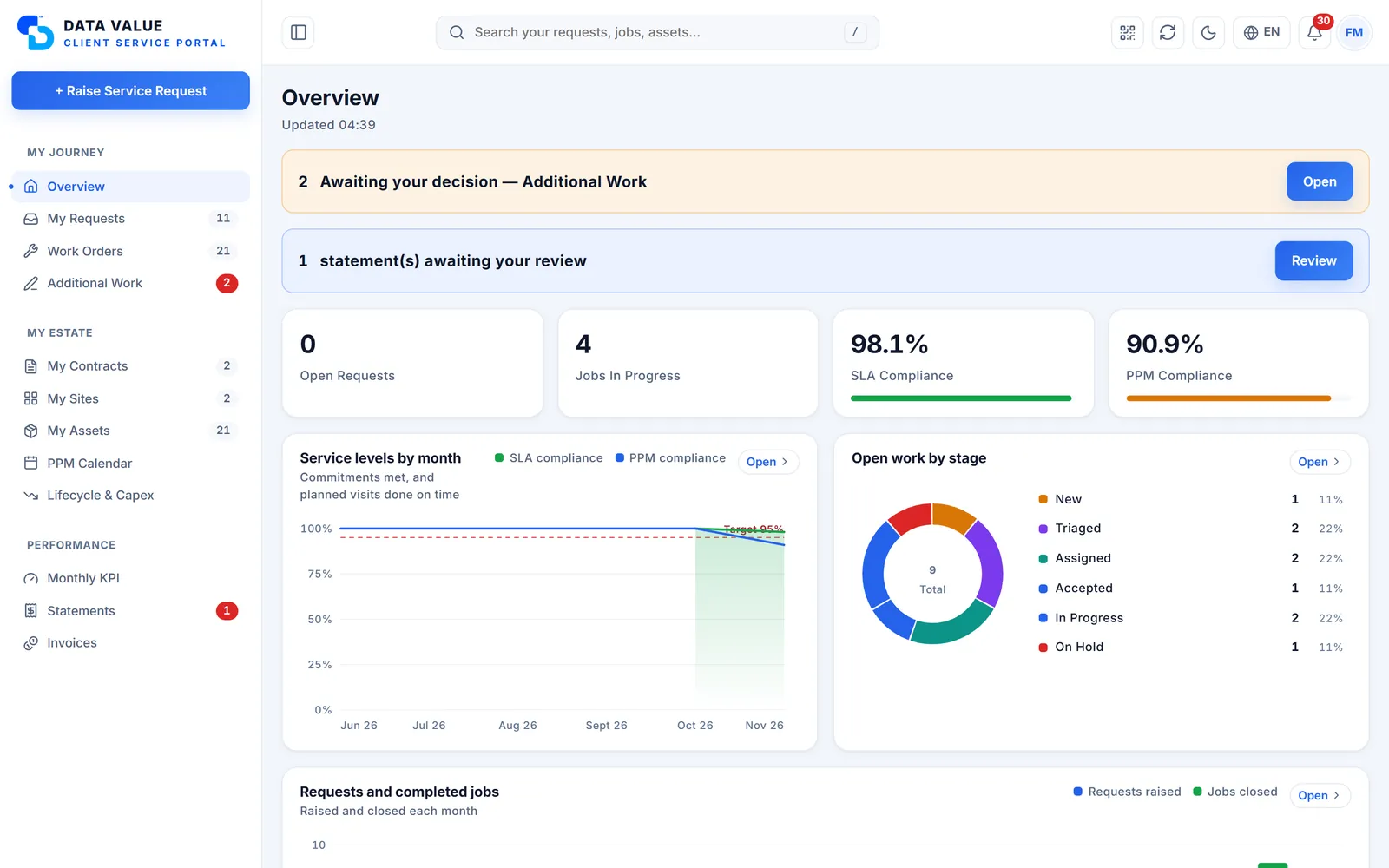

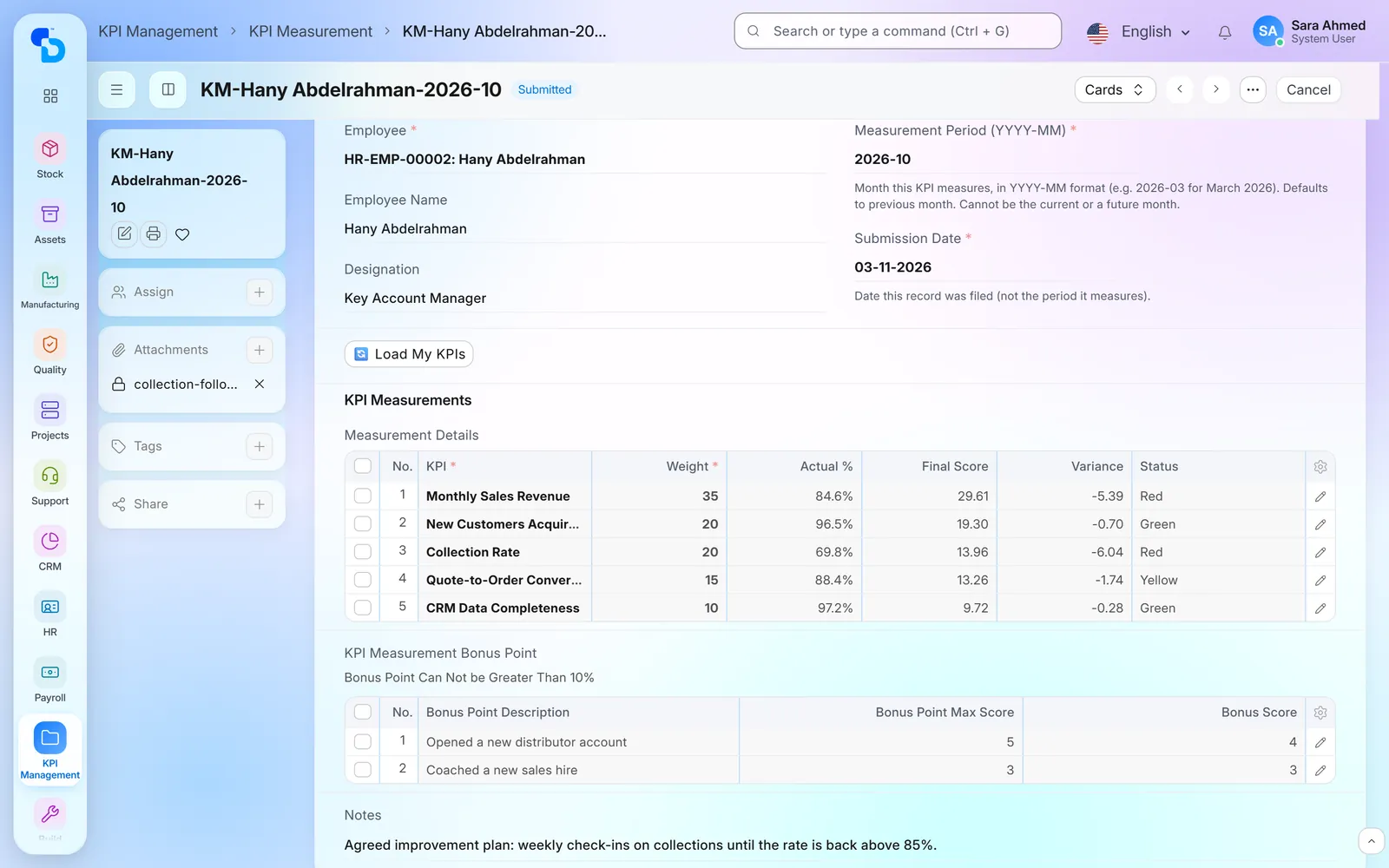
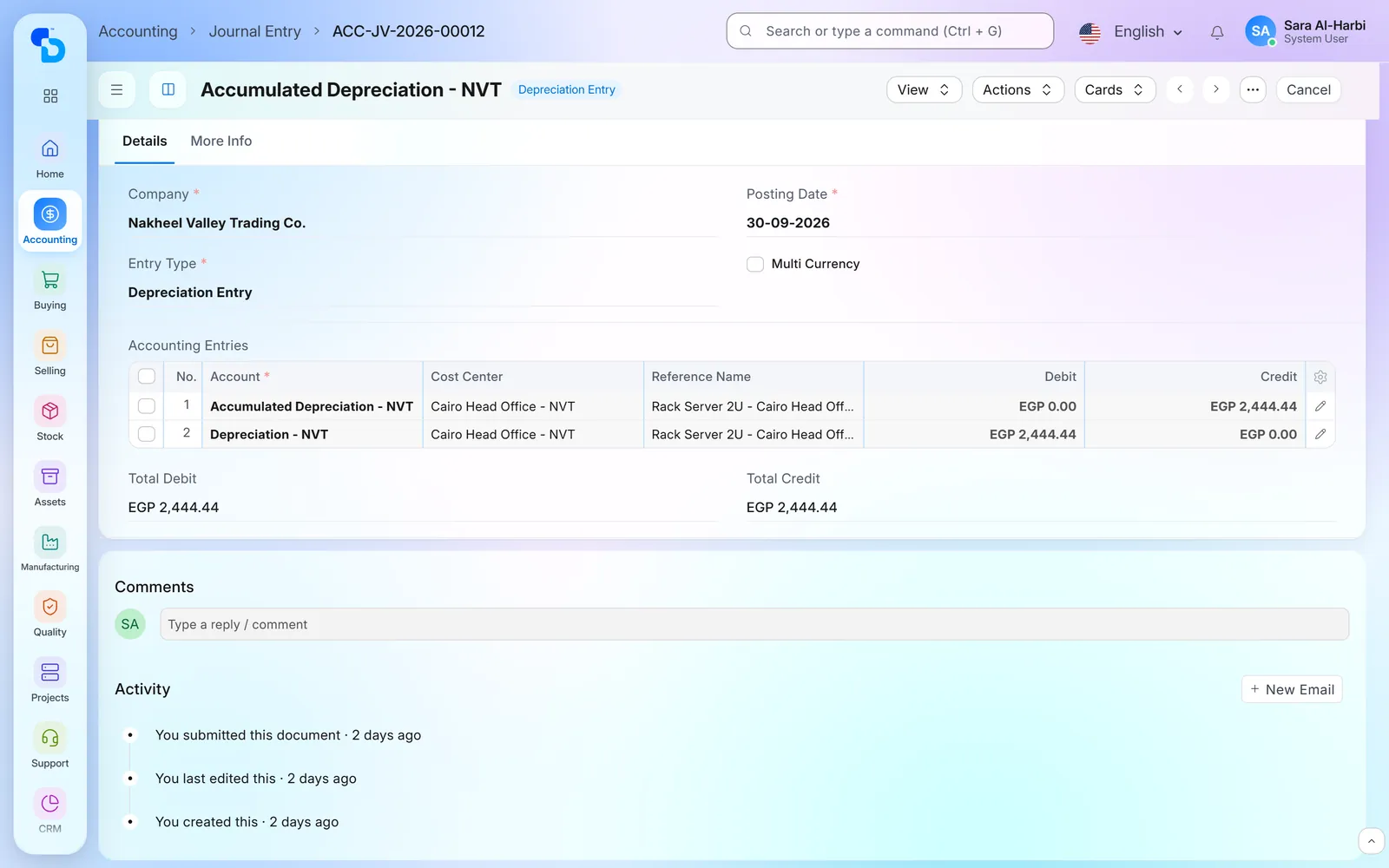


Our ERP for non-profits keeps grants, aid stock, projects and HR on ERPNext. Each grant gets a cost centre and a budget, its payments reach the ledger, and in-kind aid leaves its own warehouse. For a charity foundation in Saudi Arabia, we also built a grants layer on top, from the partner’s application to the last instalment.
A grant programme opens with its budget, held on its own cost centre.
Partner organisations send their licence, bank details and governance papers.
A partner applies to the programme, and reviewers score the application.
The committee votes, and larger grants go to the board.
Cash grants are paid in instalments, while in-kind aid leaves the warehouse on a delivery note.
During the project, a project record with weighted tasks shows the progress.
Finally, each payment and each delivery carries its cost centre into the accounts.
Applications arrive by e-mail, while scores sit in one file and budgets in another. So nobody sees at a glance how much is committed.
A foundation funds other organisations. Before it pays, it needs their licence, bank account and governance papers on file and up to date.
A grant passes through reviewers, a finance manager and a committee. Months later, the reasons behind a decision are hard to find.
A grant is rarely paid at once. Each instalment depends on a condition, such as a progress report, and finance must know what is due.
Materials given as aid leave a warehouse, so they must be counted and costed like any other stock.
Seven things for grant-making and aid programmes. Each one says what standard ERPNext does and what we built for a charity foundation in Saudi Arabia.
For a charity foundation in Saudi Arabia, we built partner registration through a web form. The partner’s record holds the licence number and its expiry date, the supervising authority and the IBAN certificate. It also keeps the latest financial statements and the governance report. Staff then activate the account, ask the partner to complete missing data, or reject it with a reason.
Each grant gets its own cost centre and budget. The budget variance report then shows the budget, the actual spend and the balance, and spending above the budget can be stopped. For a charity foundation in Saudi Arabia, we also built programme records with their type, field, manager, dates and budget. There, the programme’s consumed budget rises when the chief executive approves a grant. Each programme also states whether the grant is paid in cash or given in kind, and which partners may apply.
For a charity foundation in Saudi Arabia, we built application forms from templates, where each question has an answer type and can carry a score. The financial review then records whether the project budget is realistic, with the finance manager’s comments. Each committee member records a vote (approve, reject or absent), a score and notes. Reviewers also score the project study on criteria such as feasibility, impact, sustainability and risk management. For larger grants, the decision also keeps the board’s meeting number, resolution number and recommendation file.
Finance records each grant payment as a journal entry under the grant’s cost centre, so the ledger shows what each grant has received. For a charity foundation in Saudi Arabia, we also built a payment schedule on the approved grant: the date, the amount and the entitlement condition of each instalment. There, each instalment passes the project manager, the accounts team and the finance manager before payment. Finance then creates the journal entry from the instalment itself.
Aid items sit in their own warehouse. Staff issue them to a partner on a delivery note, and the stock and its cost are posted to the programme’s cost centre. Staff can also raise a material request for aid items. For a charity foundation in Saudi Arabia, we also built a material delivery application. It names the items, the quantities and the warehouse, while settings cap the quantity a partner may receive from each warehouse within a set period.
Each funded grant can be followed as an ERPNext project, with weighted tasks, dates and progress. For a charity foundation in Saudi Arabia, we also built the grant’s own follow-up: outcome indicators, a risk table and a plan of field visits. An interim evaluation there rates the project and the partner on set criteria, from one to five. Each grant also links to a strategic goal and an initiative.
Standard HR on ERPNext covers employee records, attendance and leave, which then feed payroll. Each employee can also carry goals for an appraisal cycle.
Screens show demo data.
A cost centre and budget per grant, journal entries for grant payments, and financial statements.
Purchases for programmes and operations, with budget checks and approval rules.
Revenue from the organisation’s own products and publications.
Warehouses for in-kind aid, with delivery notes to partners.
A register of assets across facilities and sites, with depreciation.
Employee records, attendance and leave, feeding payroll.
A project with weighted tasks for a funded grant.
Grant-making foundation · Saudi Arabia
Finance, purchasing, assets, HR and grants in one connected system.
The registers and ledgers that sit behind the programmes.
Screens show demo data.
Yes. We have implemented ERPNext for a charity foundation in Saudi Arabia. The project covered accounting, purchasing, sales, fixed assets and HR, as well as a non-profit layer for grants.
Yes, in the grants layer we built for a charity foundation in Saudi Arabia. Partners register through a web form and attach their licence, bank and governance documents. Once staff activate the account, the partner applies to the programmes open to it.
Yes, in the same grants layer. Each programme lists its eligible partners by city, area, project type and tag, and limits how often a partner may apply. Staff can also stop receiving applications on the portal and show the reason.
In the grants layer we built, each committee member records a vote, a score and notes on the application. The decision also keeps the finance manager’s comments. For larger grants, it keeps the board’s meeting number, resolution number and recommendation file.
Yes. Finance records each payment as a journal entry under the grant’s cost centre, so the ledger shows what is paid. For a charity foundation in Saudi Arabia, we also built a schedule of instalments, each with a date, an amount and an entitlement condition.
Yes. Aid items sit in their own warehouse, and staff issue them to a partner on a delivery note at no charge. The stock and its cost are then posted to the programme’s cost centre. For a charity foundation in Saudi Arabia, we also built delivery applications with the quantities allowed for each warehouse.
Both. Accounting, purchasing, sales, stock, assets and HR are standard ERPNext. Partner registration, grant programmes, scored applications, committees and instalments are additions we built on top of ERPNext for a charity foundation in Saudi Arabia. On a new project, we adapt them to the organisation’s own steps.
Admissions, attendance, grades and fee collection for schools, plus online courses for training centres.
Patient records, appointments and medical billing, linked to accounts and stock.
Units, contracts, collections and maintenance tickets in one solution.
Our solution for facility and maintenance teams.
Tell us how you fund, approve, pay and follow up. Then we will show you how the same steps run in an ERP for non-profits built on ERPNext.

Each one opens a page that shows what we set up for that trade, and where.
All industries →Specific systems we built and extended on ERPNext and Frappe, shown with real screens.
Not sure which fits? We map your process to the right mix in a free demo.
All solutions →