


Real estate CRM software has become essential for developers, brokers, and property managers who need one system for leads, sales, and daily operations. Data Value builds this capability into a complete ERP platform, connecting every unit, contract, and client record on a single dashboard so your team saves time and closes deals faster.
Table of Contents
How Real Estate CRM Software Works Inside a Complete ERP Platform
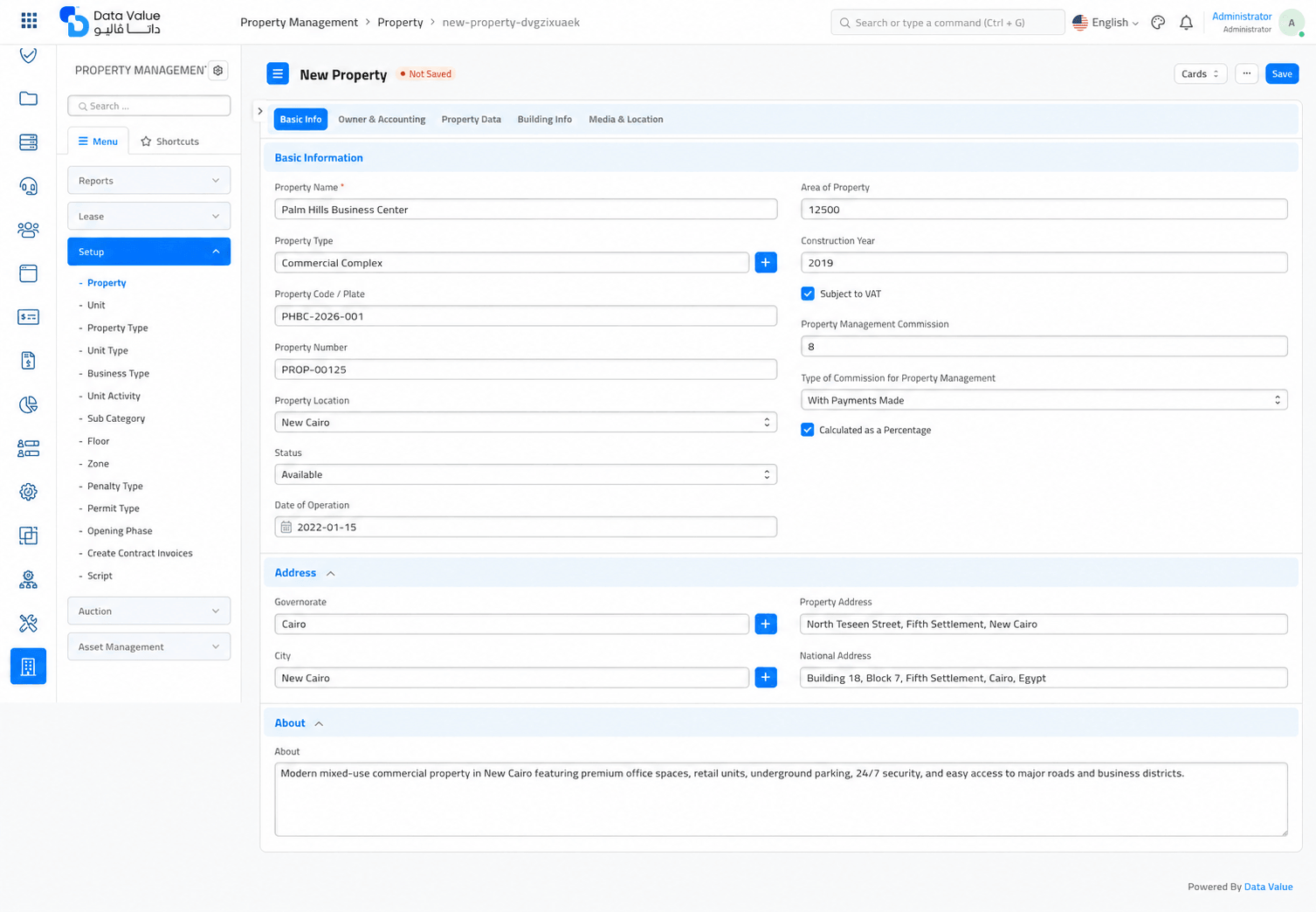
At its core, real estate CRM software is a form of client relationship management (CRM) built specifically for property transactions. It replaces scattered spreadsheets with one organized contact and client database.
Every lead, buyer, tenant, and investor lives inside the same record, updated automatically as deals progress. This gives your team instant context before every call or site visit.
As real estate agent software, the platform also tracks tasks, appointments, and communication history for each client. Data Value extends this further by linking CRM records directly to units, contracts, and invoices inside one ERP.
Demand for this kind of platform keeps rising, as recent research on the real estate CRM software market shows steady adoption across agencies of every size.
Lead Management and Sales Pipeline Tools for Real Estate Teams
A dedicated lead management software module gives every new inquiry an owner, a status, and a next action from the moment it arrives. Nothing sits untouched in a shared inbox.
Each lead then moves through a clear sales pipeline for real estate, from first contact to signed contract, so managers can see exactly where deals stall.
Built-in real estate lead generation tools capture inquiries from your website, portals, and paid ads, feeding them straight into the same pipeline without manual entry. Platforms like the HubSpot CRM for real estate show how lead scoring and campaigns work together in practice.
Follow-up reminders and task automation make sure no lead goes cold; the system prompts agents to call, email, or schedule a viewing at the right moment.
For prospects who are not ready yet, email/SMS drip campaigns keep your brand in front of them with minimal ongoing effort from your sales team. This is what a real estate CRM with lead management should deliver from day one.
Supporting Agents, Brokers, and Property Listings in One System
Property listing management keeps every unit’s photos, price, and availability status synced across your website and marketing channels automatically.
Through MLS integration, new listings and status changes flow directly into the CRM, so agents never work from outdated information.
For solo producers, a real estate CRM for agents means one simple screen for contacts, showings, and offers, without unnecessary complexity.
For team leaders, a real estate CRM for brokers adds oversight: lead routing rules, performance dashboards, and shared pipelines across the whole office. Larger brokerages often compare established platforms such as the Salesforce real estate CRM guide when evaluating enterprise-level options.
Read Also:
- How to Choose an ERP for a Contracting Company?
- What Is an ERP System for Project Sites, and How Does It Protect Your Project Data?
- The Importance of Mobile Apps for Businesses
- Discover the Best ERP in Saudi Arabia (ZATCA-Compliant)
Managing Deals, Commissions, and Transactions with Confidence
Commission tracking calculates each agent’s or broker’s share automatically once a deal closes, based on preset rules for splits and referral fees.
Every step of real estate transaction management stays visible in the same record: offer, inspection, financing, and closing, so nothing falls through the cracks.
On the marketing side, real estate marketing automation turns website visitors and portal inquiries into tracked leads without extra manual work from agents.
For brokers, a real estate CRM for brokers ties commission plans directly to each team member’s closed deals, simplifying monthly payout calculations.
Mobile Access, Pricing, and Choosing the Right CRM for Your Agency
A capable mobile CRM app lets agents check new leads, log a call, or update a listing status right after leaving a showing, with no laptop required.
When evaluating options, many teams start by researching the best real estate CRM software for their size, then narrow the list by required integrations.
Some agents test free real estate CRM software first, but usually outgrow the contact limits once their pipeline grows past a handful of active deals.
Real estate CRM pricing should be transparent and predictable, scaling with users and contacts rather than penalizing you for closing more deals. Dedicated tools such as Follow Up Boss show how mobile-first design has become standard among CRM providers built for real estate teams.
Quick Links Before You Decide
Explore more before making a final decision: read our blog for deeper guides on real estate CRM pricing and implementation, browse our success stories from agencies already running a real estate CRM with lead management inside their ERP, request a free demo, or contact our team directly.
Conclusion
Real estate businesses that grow past a handful of listings need more than a spreadsheet to manage relationships and deals. Real estate CRM software gives your team one place to track every lead, contract, and closed sale, instead of scattered notes and forgotten follow-ups.
Data Value builds this capability directly into a full ERP platform, so your CRM data connects to units, contracts, billing, and maintenance without exporting anything between systems. Agents get a real estate CRM for agents that feels simple day-to-day, while owners and managers get the financial visibility a growing portfolio demands.
Whether you run an independent brokerage or a large developer with dozens of active projects, the right platform should scale with you rather than force a switch later. Stop juggling separate tools for leads, contracts, and accounting, and bring your entire real estate operation into one connected system.
Request a free demo with Data Value today and see how your specific pipeline, listings, and client data would look inside a single dashboard built for real estate.
Read Also:
Frequently Asked Questions (FAQ)
What is the best real estate CRM software?
There is no single perfect platform for every business, since the right fit depends on your business model, team size, and sales process. Strong platforms combine lead tracking, listing management, and reporting in one place. Data Value builds its platform to serve both independent agents and larger real estate companies, pairing CRM functionality with full ERP capabilities. Request a demo to see how it fits your workflow.
Is there a free real estate CRM available?
Yes, some providers offer free real estate CRM software that suits solo agents managing a handful of leads. However, free plans usually limit contacts, automation, and reporting as your pipeline grows. Once your agency starts closing more deals, a paid platform with deeper integrations becomes more cost-effective than juggling multiple free tools. Read our blog for a closer look at free versus paid CRM options.
How much does real estate CRM software cost?
Pricing for real estate CRM software varies widely, from a few dollars per user each month to enterprise packages with custom onboarding. Real estate CRM pricing typically scales with the number of users, contacts, and automation workflows included. Some agents start with free real estate CRM software, then upgrade once lead volume outgrows its limits. Contact us for a quote tailored to your team size.
What features should a real estate CRM include?
A capable system should include contact and pipeline management, listing sync, automated follow-ups, and mobile access for agents in the field. It should also support email and SMS campaigns, document storage, and reporting dashboards for managers. Beyond these basics, integration with accounting and operations data turns a simple contact tool into a complete business platform. Browse our success stories to see these features in action.
Does real estate CRM software integrate with MLS listings?
Yes, most modern real estate CRM software connects directly with MLS feeds, pulling new listings and status updates into the same dashboard agents already use. This removes duplicate data entry between the MLS and the CRM. As a result, agents spend less time updating records and more time following up with buyers and sellers. Request a demo to see MLS sync in action.
Is real estate CRM different from a general CRM?
Yes, real estate CRM software differs from a general CRM because it is purpose-built for listings, showings, and closing timelines. A generic sales tool tracks deals and contacts, but it rarely understands MLS data, commission splits, or property-specific documents. This is why agencies that outgrow spreadsheets usually move to a system designed around the real estate transaction, not a repurposed sales tool. Read our blog on choosing a property-specific CRM over a generic one.
Can real estate CRM software manage leads and follow-ups automatically?
Yes, automation is one of the strongest reasons agencies adopt this kind of platform. A system built around real estate CRM with lead management assigns new leads to agents instantly and triggers follow-up reminders based on each contact’s stage. Email and SMS sequences then nurture leads that are not ready to buy yet, without any manual work from the agent. Contact us to map out an automation workflow for your team.
Which real estate CRM is best for small agencies or independent agents?
Small agencies and independent agents usually need a real estate CRM for agents that is simple to set up without a dedicated IT team. Brokers managing several agents, on the other hand, often need a real estate CRM for brokers with team-level reporting and lead distribution rules. The best real estate CRM software for a small team keeps pricing predictable while still covering the essentials: contacts, follow-ups, and listings. Browse our success stories from agencies similar to yours.
Does real estate CRM software track commissions and deals?
Yes, the platform automatically calculates commissions and deal values as soon as a sale closes. Each closed deal splits the payout between the agent, broker, and any referral partner involved, based on preset rules. Because this happens inside the same system that manages the deal itself, disputes over payout amounts become far less common. Request a demo to see payouts calculated in real time.
Is real estate CRM software available as a mobile app?
Yes, most providers now offer full mobile access so agents can update records, log calls, and check new leads directly from a showing or open house. This matters most for agents who spend the majority of their day outside the office. A reliable app keeps the entire team’s data current, even when nobody is sitting at a desk. Contact us to see the mobile experience for yourself.