

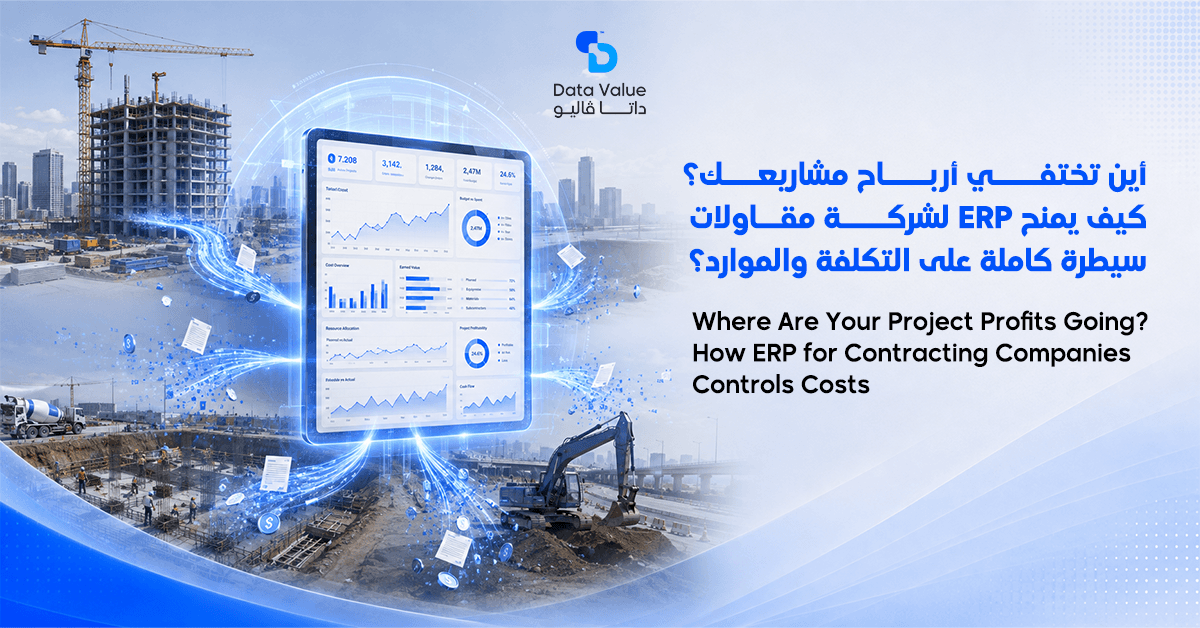
An ERP for contracting companies closes the gap between scattered spreadsheets, disconnected tools, and real project costs.
Data Value works with construction teams every day, and this guide explains where profit quietly leaks out and how the right platform stops it for good.
Table of Contents
Why Growing Contracting Companies Need an ERP for Contracting Companies That Connects Every Site
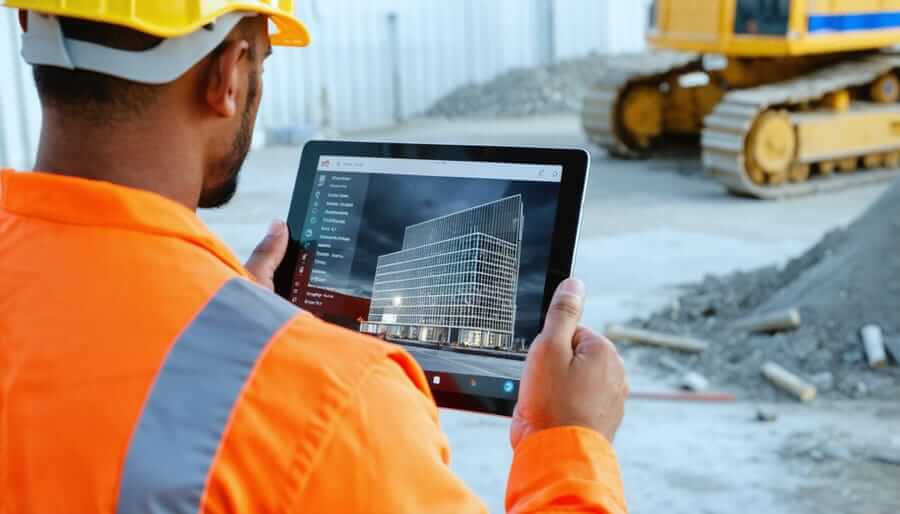
Construction work rarely follows a straight line. Every project moves through planning, procurement, execution, and handover, and each stage depends on accurate data from the previous one. A contracting company often runs a dozen projects at once, each with its own site, crew, and schedule.
Scattered Data and the Real Cost of Disconnected Systems
On top of that, contracting companies juggle dozens of subcontractors and suppliers across different locations. This complexity makes manual tracking through spreadsheets slow and error-prone, and it is exactly the gap an ERP for contracting companies is built to close. As a result, finance teams struggle to link real expenses back to the right project.
Data lives in different departments without a shared link between them, which delays decisions when speed matters most.
For this reason, a unified system becomes essential to bring scattered records into one place. Moreover, construction ERP software provides leadership with a real-time view of project performance rather than a report that arrives weeks too late. Based on this, decisions shift from guesswork to numbers your team can trust.
Core Features Every ERP for Contracting Companies Must Deliver Across Projects and Accounts
A true ERP for construction companies has to cover every part of the business, not just accounting.
Many owners search for the best ERP for contractors precisely because generic software leaves gaps between departments. On one hand, project managers need multi-site project tracking that updates in real time, without waiting for a weekly status call. On the other hand, finance teams need cost center management that ties every expense to the correct budget line.
Job costing software adds another layer of precision by breaking each project into trackable cost categories. In addition, this structure keeps budgets organized and easy to review at any stage of construction.
A reliable project-based ERP system also handles subcontractor management from the signed contract through the final payment, which is exactly what separates an ERP for construction companies from a basic bookkeeping tool. Furthermore, construction accounting software should sit inside the same platform as project data, not in a separate tool that requires manual reconciliation every month.
Procurement & inventory management rounds out the picture by linking purchase orders directly to site-level stock. This also helps sales teams prepare faster, more accurate bids and quotes for new clients. At the same time, e-invoicing & VAT compliance keeps every invoice aligned with local tax requirements, which matters for finance teams working across multiple contracts.
Reports and Dashboards That Executives Actually Use

Executives need one dashboard that pulls every project’s key numbers together, instead of opening ten separate files each morning. Therefore, modern platforms build reports that adjust to each department’s priorities. A project manager watches the schedule, while a finance lead tracks cash flow and margin per contract.
In addition, mobile access lets a site engineer log progress directly from the field without a trip back to the office. This flexibility closes the gap between a problem happening and the right person finding out about it.
How to Choose the Right ERP for Contracting Companies for Your Business Model

Customization and Ease of Adoption Across Teams
No single project-based ERP system fits every contracting business the same way, since project types and team habits vary widely. For this reason, the platform should offer real customization so screens match how your team already works. At the same time, the interface needs to stay simple enough that staff adopts it quickly, without weeks of training.
Integration Across Departments and Room to Scale
The system should integrate project management, finance, and site operations into a single, cohesive structure. As your project count grows, a scalable platform helps you avoid the cost of switching software every few years.
On the other hand, scattered legacy tools become a bigger burden with every new project, while one integrated platform keeps every process visible from a single screen.
Field support also matters, since site teams need tools that work from a phone or tablet on location, and this is often where the best ERP for contractors proves its value fastest. For this reason, choosing a vendor who genuinely understands the construction sector often decides whether a rollout succeeds.
You can learn more about the team behind this approach on our Who Are We page, or explore tailored solutions for real estate and contracting businesses.
If you want an outside reference point for comparing options in the Saudi market, TabSyst publishes a useful overview worth checking.
Traditional Tools Versus One Connected Platform
Some companies still run on a patchwork of spreadsheets, standalone accounting software, and separate tracking apps. This mix looks cheaper at first, but it costs the team hours of manual reconciliation every single week.
In contrast, a connected platform brings every function into one interface, which cuts down on manual data transfer between tools. As a result, teams save time and reduce the human error that comes with copying numbers by hand.
Read next:
The Real Business Value Your Company Gains After Implementing ERP for Contracting Companies
Your team gets cleaner data from day one after rolling out a project-based ERP system built around real project data rather than generic templates.
As a result, fewer errors come from re-entering the same numbers across disconnected tools. Decisions also move faster because leadership sees live information instead of waiting on a report.
Moreover, an ERP for construction companies gives tighter control over project costs by comparing planned budgets against actual spend in real time.
On the other hand, performance tracking improves through clear indicators for every project and every field team, which is why so many owners now compare options before picking the best ERP for contractors on the market.
The system also strengthens how you manage equipment and people across multiple locations at once. In addition, it links the head office directly to every site, which improves cash flow and cuts down on approval delays.
At the same time, leadership gets unified reports built on real-time data to support faster strategic calls.
How the Right Platform Strengthens Client and Supplier Relationships
Benefits extend beyond internal operations into how you deal with clients and suppliers. When quotes and invoices go out on time, client trust improves along with it.
Furthermore, the system makes it easier to track supplier and subcontractor commitments against agreed delivery dates.
On the other hand, leadership gains a much clearer view of risk before it becomes a real problem, such as delayed material or a budget overrun on one line item. As a result, project management shifts from reacting after issues appear to catching them early instead.
A Practical Path to Successful Implementation
Success depends on how a company rolls the system out, not just on the software itself. Therefore, it helps to start with the core processes that need automation first, before adding secondary features later. Assigning one internal owner for the rollout also speeds up adoption across the team.
In addition, a clear training plan for both field and office staff matters, along with a pilot phase before full rollout. Moreover, working with an implementation partner who understands the sector shortens rollout time and reduces resistance to change.
This approach to construction project management software builds on a genuine understanding of the sector, accounting for multi-site operations and overlapping projects. You can browse more technical guides on our blog.
For additional comparisons of ERP options in the region, HAL Simplify covers useful details, while Azdan lists several vendors offering similar solutions.
Read next:
Conclusion: ERP for contracting companies
This guide shows that success for contracting companies starts with unifying data scattered across offices and job sites.
An ERP for contracting companies connects projects to finance, procurement, and inventory inside one linked structure. In addition, the right system gives leadership a live view that speeds up decisions and cuts down on errors.
On the other hand, choosing a system that fits the construction sector matters more than simply buying a finished product.
Therefore, successful rollout depends on understanding real operations, not just having an attractive interface. For this reason, Data Value Solutions focuses on understanding how contracting companies actually work before designing any system for them.
A strong platform still needs a trained team and clear processes to deliver its full value. Choosing the right technology partner deserves the same attention a company gives to choosing a contractor for a major project.
If your company wants a system that unifies operations and gives you tighter control over projects and costs, visit Data Value to explore available solutions and speak with the team about your specific needs.
Frequently Asked Questions About ERP for Contracting Companies
How long does it take to roll out the system across a construction company?
Timelines depend on company size and how many projects run at launch. A mid-sized firm usually needs two to four months to finish setup and training before going fully live.
Can the platform track multiple sites spread across different regions?
Yes. Cloud-based systems connect any number of sites to one central database. As a result, leadership can follow every location in real time regardless of distance from head office.
Does the company need to hire extra technical staff to run it?
Not usually. A well-designed platform relies on a simple interface that existing staff learn within a few weeks. Still, it helps to assign one internal coordinator during the early rollout period.
What is the difference between construction ERP software and traditional accounting software?
Traditional accounting software only handles financial entries. Construction ERP software connects finance to projects, procurement, inventory, and contracts in one system, giving a full operational picture rather than a financial one alone.
Does this type of system work for small contracting firms, or only large enterprises?
The platform suits companies of every size, as long as you pick the right modules for your actual operations. A smaller firm might start with project and accounting modules only, then add more as the business grows.
How does the system handle subcontractors and quotes from multiple suppliers?
The platform keeps one central record for every subcontractor and supplier, linking each quote to its related contract and project directly. As a result, comparing offers and tracking delivery commitments becomes far easier.
Can a company measure real return on investment from this kind of system?
Yes, through clear indicators such as faster monthly reporting, fewer invoice errors, and closer alignment between estimated and actual project costs. These indicators give leadership an objective view of the platform’s value within the first year.