


More companies are investing in business mobile apps to serve customers faster and compete more effectively. As markets shift, mobile app development for business has become a core priority rather than an afterthought.
At Data Value, we help companies navigate this shift with practical, well-planned solutions. This guide walks you through the options and the benefits you can expect.
Table of Contents

Why business mobile apps matter for companies today
Customer expectations keep shifting toward faster, more personal service. As a result, more organizations turn to dedicated mobile solutions to stay responsive and stay competitive.
In addition, a well-built app opens a direct channel between a company and its customers at any hour. On the other hand, companies that rely only on a website often struggle to reach people on the move.
Successful companies also understand that investing in a digital solution is not just about matching competitors.
It is about understanding what customers actually expect from a brand today. For this reason, many businesses now treat mobile as a core part of their customer strategy, not a side project.
The practical benefits of business mobile apps over time
A well-planned solution delivers measurable results when it is built around a real business need. For example, customer loyalty apps help turn one-time visitors into repeat, returning customers. Likewise, thoughtful mobile UX design reduces friction and keeps churn rates lower. Furthermore, a strong app experience often supports higher order values and more frequent purchases.
This kind of app-based customer engagement tends to compound over time as customers form a habit around the app.
As a result, companies see a gradual but steady lift in brand recognition among their existing customers.
Signs your company may need a new digital solution
Some practical signals point to a real need for this kind of investment.
Frequent repeat questions from customers about services that could be automated are one clear sign.
Likewise, a high rate of manual errors in order processing points to a need for a more accurate system. In addition, teams that struggle to track field staff performance often lack one central, reliable tool.
As a result, investing in a mobile solution becomes a logical step that serves the team before it serves the end customer.
These friction points also affect customer satisfaction indirectly over time. A customer who waits too long for a reply often looks for a faster alternative instead.
For this reason, it helps to map the customer journey closely before deciding on the exact shape of the solution.
How to choose the right type of business mobile apps for your company
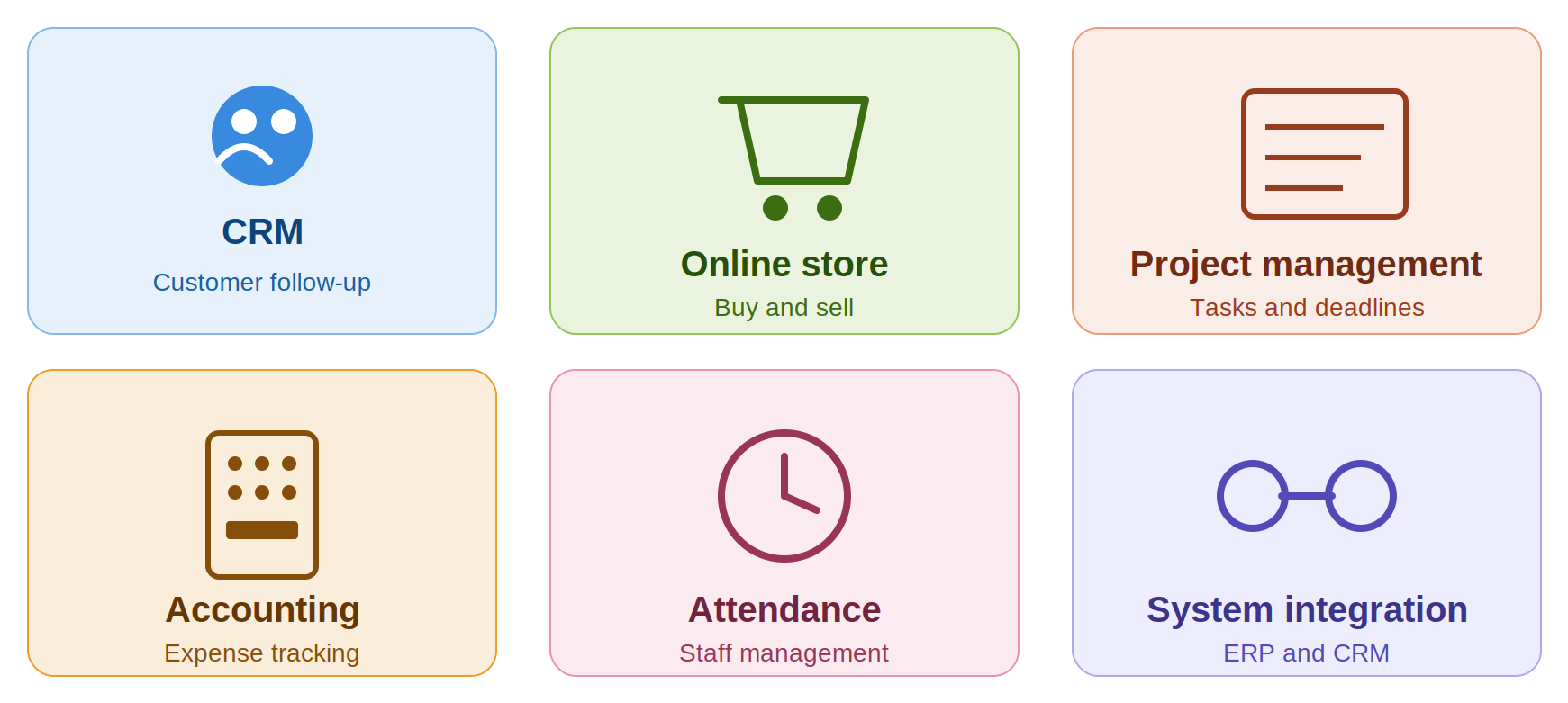
Before starting mobile app development for business, a company needs to define its core goal clearly. Sales-driven teams often need an enterprise mobile app built around lead tracking and follow-up. In contrast, project-driven companies need a tool built around tasks and deadlines instead. This clarity gives the whole team a sharper view of daily operations from day one.
Specialized app types by industry
Needs vary widely by sector, so digital solutions for companies take many different forms in practice. Retail companies often need a shopping experience built for mobile commerce (m-commerce) and quick checkout.
Finance teams, meanwhile, benefit from expense-tracking tools that update records the moment a cost occurs. Similarly, an attendance tool saves HR teams considerable time compared with manual sign-in sheets.
For this reason, many companies now prefer a purpose-built solution over slow, paper-based processes.
At this stage, some companies choose to work with a specialist team to design a custom business app for their exact workflow. This choice usually leads to a solution that matches the industry’s specific requirements more closely.
A quick checklist before you define the feature list
It helps to draft an initial feature list before reaching out to any development team, especially when the goal is a custom business app built from scratch.
This step clarifies scope early and helps avoid costly changes later in the project. Consider the following points while building that list:
- Identify your primary audience: external customers, internal staff, or both.
- List the repetitive manual tasks the app should automate first.
- Note which existing systems the app will need to connect with.
- Set a flexible budget that allows for a few added features later.
- Define clear success metrics to measure return on investment after launch.
Key questions to answer before investing in business mobile apps
Many founders ask about the difference between a native app and a hybrid app before deciding. The right choice depends on your available budget and the performance you actually need. Others raise the classic question of mobile app vs website, and the answer depends on customer behavior and the service itself.
In addition, startups often debate Android first or iOS first, and that usually comes down to where their current customers are.
| Criteria | Native app | Hybrid app |
|---|---|---|
|
Performance |
Higher and smoother |
Good, but slightly lower |
|
Cost |
Generally higher |
Usually lower |
|
Build speed |
Slower |
Faster in most cases |
|
Best for |
Complex, feature-heavy apps |
Projects needing a quick launch |
Some companies also need to connect their app to an existing ERP system to keep data flowing automatically.
Read next:
At the same time, retailers often look for a way to sync the app with their CRM to track buying behavior more accurately.
Others prefer to link the app directly to their accounting software to unify financial records in one place.
You can find detailed answers to these questions on the Data Value blog, which regularly publishes articles on business technology.
Common mistakes companies make when planning this kind of project
Some companies focus too heavily on visual design before the app’s core purpose is even clear. Others skip real user testing before rolling the app out to a wider audience. Meanwhile, some teams overlook a maintenance plan for the period right after launch.
As a result, the app develops recurring technical issues that slowly erode user trust. For this reason, it helps to plan the post-launch phase from the very start of the project.
Data protection is another area some teams underestimate during planning. Trust has become a deciding factor in whether a customer keeps using a brand’s app or drops it entirely.
Push notifications, in particular, need a thoughtful strategy, so they add value instead of feeling intrusive. Security and consent should be part of the design from day one, not an afterthought added later.
How Data Value supports your business mobile apps project
Once you know the type of app you need, the next step is choosing the right delivery partner for your custom business app.
Data Value Solutions combines hands-on delivery experience with a deep understanding of different industries.
As a result, you get a result that reflects your brand and actually serves your operational goals. The team can also connect your new app to systems you already use, including support for mobile app development for businesses of any size.

Should you build an in-house team or work with an outside partner?
Business owners often weigh building an internal team against partnering with a specialized outside team.
An in-house team offers more day-to-day flexibility but requires real investment in hiring and training. An outside partner, on the other hand, brings experience from multiple projects and often moves faster.
Working with a partner also reduces the risk tied to staff turnover and lost technical knowledge.
Smaller and mid-sized companies often prefer an outside partner during the early stages of a project. They later build a small internal team to manage simple updates once the product stabilizes. This approach balances full control over the product with cost efficiency over the long run.
The delivery process with the team typically follows these stages, whether you are building a simple tool or a full enterprise mobile app:
- An initial discovery session to understand goals and current operational challenges.
- Early interface design, reviewed with your team before any development starts.
- Building the first version and testing it internally for stability.
- A gradual rollout with close attention to early user feedback.
- Ongoing technical support and regular updates after the official launch.
If you would like to explore ready-made solutions, visit the app marketplace to see what is currently available. You can also learn more about the team and its background on the Who are we page.
Andromo notes that companies with a dedicated app tend to see stronger engagement than those relying on a website alone.
OZS similarly points out that a store app tends to raise repeat purchase rates noticeably. Meanwhile, the Mobi Art4Muslim blog shares real-world examples from several industries that adopted mobile solutions.
These sources all point to one shared idea: the digital experience has become central to how customers choose a brand.
A company that invests in a fast, seamless experience gains a clear edge over its competitors. Good planning, in the end, matters more than the size of the budget alone.
Even a lightweight progressive web app (PWA) can be a smart starting point for teams testing demand before a full build.
Conclusion: business mobile apps as a growth investment
Companies today need reliable digital tools to keep up with constantly shifting customer expectations.
This guide covered the different types of apps, from project management to online stores and accounting tools, whether the goal is a lightweight tool or a full enterprise mobile app.
It also walked through the key questions to answer before committing to a build, from choosing the right type to connecting it with existing systems. In addition, we looked at how the right app can support customer engagement and steady revenue growth over time.
Data Value combines technical experience with a real understanding of different industries when building any digital solution. The team also factors in your budget and timeline when recommending the right approach for your project.
Read next:
You can request a demo with the Data Value team to discuss your idea and get an initial, no-obligation consultation. Browse the app marketplace or contact the team directly through the website to take the first confident step.
Frequently asked questions about business mobile apps
How long does it take to build an enterprise mobile app?
Timelines vary based on scope and the level of customization required. Most mid-sized projects take between two and four months to complete. More complex projects can take longer to ensure the final product is stable. Request a demo
Does every small project need a custom business app?
Not always, since small projects sometimes only need a responsive website instead. A dedicated app tends to pay off for businesses with frequent, repeated customer interaction. It helps to assess expected usage volume before committing to either option. Browse the blog
What is the real difference between a native app and a hybrid app?
A native app usually offers smoother performance and a better overall user experience. A hybrid app, in turn, often costs less and takes less time to build. The right choice depends on your budget and the specific features you need. See success story.
Can the app connect to an existing accounting or management system?
Yes, Data Value supports connecting a new app to accounting or management systems already in place. This connection keeps data flowing automatically and removes the need for repeated manual entry. It also reduces human error and saves considerable time for busy teams. Request a demo
What does this kind of project typically cost?
Cost depends mainly on the number of features and the level of customization needed. It is best to request a quote based on your actual business needs rather than a general estimate. The level of integration with existing systems also affects the final price.
Does a mobile app really improve customer loyalty?
Yes, these tools make direct communication and personalized offers much easier to deliver. This tends to raise the rate of repeat interaction with the brand over time. Customers also feel more valued when a service feels built specifically for them.
How do I start a project with the Data Value team?
You can reach out directly through the official website to discuss your idea. The team listens to your actual needs first before recommending any technical direction. After that, you get a clear initial consultation with no obligation on your part.